
Glynn County Criminal Court Records
A Glynn County criminal court record is the case file maintained by the court after a prosecution begins. It is not the same as a jail booking, an inmate roster entry, a sheriff warrant list, or a statewide criminal-history report. The court file can include the formal charging instrument, warrant or accusation, indictment in felony cases, bond orders, arraignment record, plea forms, motions, docket entries, disposition, sentence, probation terms, restitution, and court costs.
Court venue depends on charge type. Felony criminal cases generally belong in Glynn County Superior Court, which is part of the Brunswick Judicial Circuit. Misdemeanor cases may be in State Court, Municipal Court, or another lower court depending on the charge and issuing agency. Magistrate Court can appear early in the process through warrants, first appearances, bond review, and preliminary hearings. The more focused arrest-to-charge pathway is handled separately in the Glynn County arrest records and court charges material.
Search Glynn County Criminal Court Records
The main statewide online court-search channel is re:SearchGA, but Glynn County criminal court record availability depends on court participation, access level, case type, age, and confidentiality rules. Search by defendant name or case number when available, then narrow by court, county, category, and filing date if the portal allows it. If a case does not appear online, the next step is the clerk or court office that owns the criminal case.
- Identify whether the charge is likely felony, misdemeanor, municipal, or an early Magistrate Court matter.
- Search re:SearchGA by defendant name or case number, using date and court filters for common names.
- Open the case result and read the docket entries, charge list, plea, disposition, and sentence fields carefully.
- Contact the Clerk of Superior Court, State Court, Magistrate Court, or Municipal Court if the result is missing or incomplete.
- Request a certified copy from the court that owns the case when the record must be used as official proof.
A statewide custody or offender search is not a substitute for a Glynn County criminal court record. Georgia DOC records cover sentenced state prisoners, sheriff roster records cover local jail custody, and court records show the prosecution events, filed orders, final disposition, and sentence. For a broader court-record context across civil, family, probate, and traffic files, use the Glynn County court records overview.
Glynn County Criminal Case Flow
A Glynn County criminal court record changes as the case moves from charge filing to final outcome. An arrest may come first, but the court case takes shape when the charging document, docket entries, bond orders, motions, pleas, and sentencing papers are filed. A felony can begin in warrant or first-appearance context, then move to Superior Court for indictment or other felony proceedings. A misdemeanor may stay in State Court or Municipal Court depending on the charge.
Case flow: Charges Filed › Arraignment › Pretrial / Motions › Plea or Trial › Disposition › Sentencing
| Stage | What Happens |
|---|---|
| Charges filed | Formal accusation, indictment, complaint, or related filing states the offense that will be prosecuted. |
| Arraignment | Charges are read or acknowledged, counsel appears, and the defendant enters a plea. |
| Pretrial / motions | Attorneys file motions, discovery issues may be addressed, hearings are set, and orders are entered. |
| Plea or trial | The case resolves by plea, bench trial, jury trial, dismissal, or another court-approved route. |
| Disposition | The docket reflects the current or final outcome for each charge, such as guilty, dismissed, acquitted, or nolle prosequi. |
| Sentencing | Sentence entries can show custody, probation, fines, costs, restitution, and other court-ordered terms. |
What Glynn County Criminal Records Show
Criminal court records show court action, not every law-enforcement fact. Public search results may provide index and docket information, while the clerk file can contain the filed documents. Some items may be restricted, redacted, account-limited, or unavailable online. The fields below reflect the research inventory for Glynn County court records and the criminal case details that commonly matter most.
| Field | What It Shows |
|---|---|
| Case number | Unique court identifier assigned to the criminal case. |
| Court name | Superior, State, Magistrate, Municipal, or another court tied to the criminal event. |
| Defendant | Person charged; protected or juvenile information may be withheld. |
| Charges | Offense description, statute or code where shown, count number, and charge level. |
| Charging document | Accusation, indictment, complaint, warrant-linked filing, or other formal charging paper. |
| Docket entries | Chronological filings, hearings, motions, orders, continuances, pleas, and results. |
| Plea | Defendant's answer to the charge or plea agreement entry when filed. |
| Disposition | Final or current outcome for each charge, including dismissal, conviction, acquittal, plea, or nolle prosequi. |
| Sentence | Custody, probation, restitution, fines, costs, and other punishment terms after conviction or plea. |
The Georgia record restriction statute source is one of the official criminal-record sources in the research.
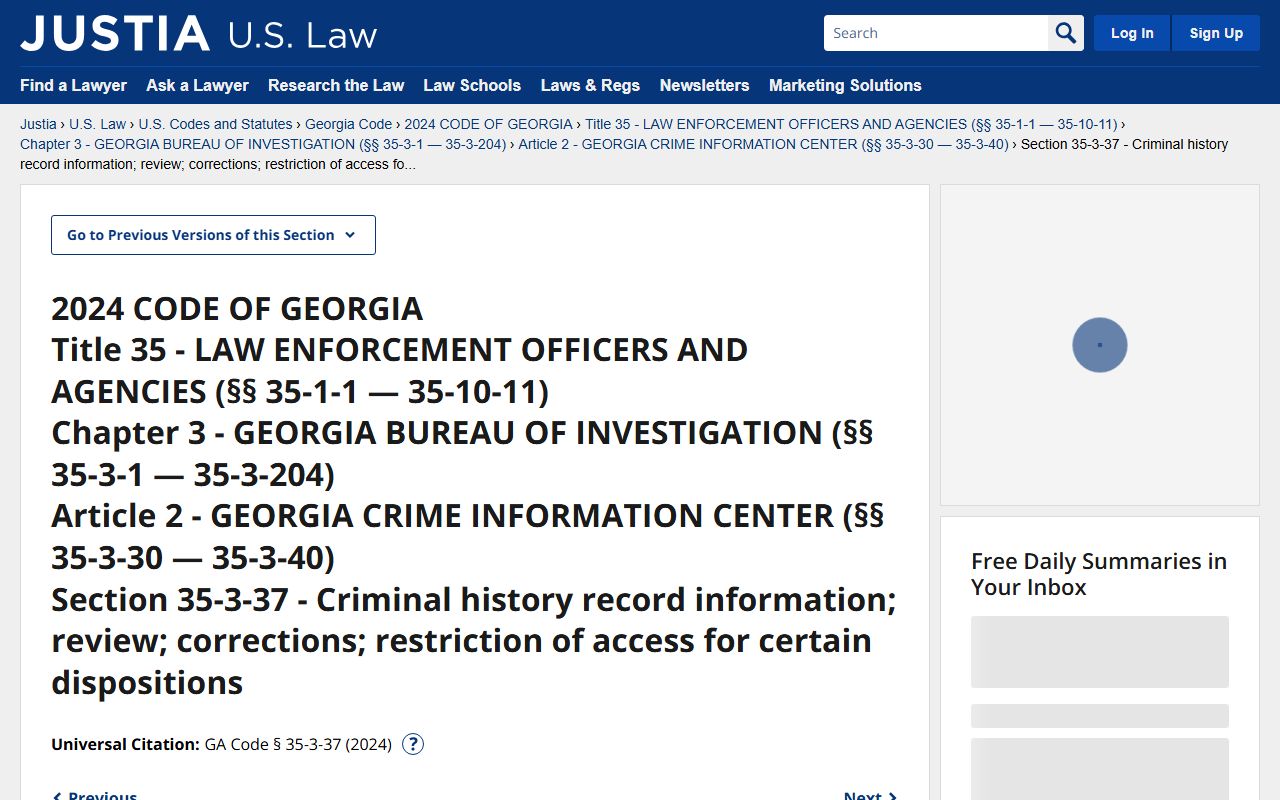
Its presence is useful because a case result can be legally restricted even when the event once appeared in a public criminal search.
Glynn County Charges vs Convictions
A Glynn County criminal court record can show charges that did not become convictions. The charge is the allegation filed or pursued by the prosecutor. A conviction is an outcome after a guilty plea, verdict, or other court-accepted resolution. One arrest can produce several charges, and each charge can have its own status. Some may be amended, reduced, dismissed, or resolved differently from the others.
| Charge | Conviction | |
|---|---|---|
| Meaning | Alleged offense filed or pursued in court. | Final criminal responsibility after plea, verdict, or court finding. |
| Where it appears | Charging document, docket, warrant-linked entry, accusation, or indictment. | Disposition, judgment, plea form, sentencing entry, or final order. |
| Can change | May be amended, reduced, dismissed, or nolle prossed. | Usually tied to final disposition and sentence, subject to appeal or later court action. |
| Search caution | A pending or dismissed charge is not proof of guilt. | A conviction should be verified with the final court disposition and sentence. |
Glynn County Dispositions and Sentences
Disposition is the final or current outcome of a charge or case. In Glynn County criminal records, a disposition may show guilty, not guilty, dismissed, acquitted, transferred, nolle prosequi, or another court result. Sentencing is a separate part of the record. It may show jail or prison time, probation, court costs, fines, restitution, and other terms. A person reading a criminal docket should match the disposition to each count rather than assume one result applies to every charge.
The Brunswick Judicial Circuit District Attorney is the prosecuting office for felony cases and many serious criminal matters in Glynn County. The Georgia Public Defender Council's Brunswick Circuit office may appear as appointed counsel for eligible defendants, but public defender files are not public court records. The docket may show attorney appearances, filed motions, orders, and outcomes without revealing privileged defense work or prosecution notes.
Sealed vs Restricted Criminal Records
Georgia research uses record restriction language, and a case may also be sealed by court order. Public pages should not promise that a restricted or sealed Glynn County criminal court record can be found through a general name search. A dismissed or not-prosecuted case may be eligible for restriction under Georgia law in some situations, while convictions have narrower options and may require statutory conditions, waiting periods, or court action.
| Sealed | Restricted | |
|---|---|---|
| Visibility | Hidden or limited by court order. | Limited public dissemination under Georgia record-restriction rules. |
| Who may still see it | Courts, law enforcement, prosecutors, or authorized parties may retain access. | Courts, law enforcement, prosecutors, and certain agencies may still have access. |
| Common path | Court order or case-specific confidentiality rule. | Eligibility under O.C.G.A. § 35-3-37 and related process. |
| Search result | No result, limited result, or restricted docket detail. | No public criminal-history dissemination or limited visible metadata depending on the record. |
Public Access to Glynn County Criminal Records
Georgia's Open Records Act supports inspection and copying of public records unless an exemption applies, but criminal court records also depend on court custody, clerk process, and confidentiality limits. Adult criminal case dockets and dispositions are often public, while juvenile matters, sealed cases, restricted criminal histories, victim-safety information, protected addresses, full dates of birth, Social Security numbers, and medical details may be withheld or redacted.
Key Statutes:
O.C.G.A. § 50-18-70 et seq. - Georgia's Open Records Act creates a right to inspect and copy public records unless an exemption applies.
O.C.G.A. Title 15, Chapter 11, Article 9 - Juvenile court records are treated differently from adult criminal court records.
The Georgia sex offender registry source is related to public criminal information, but it is not a substitute for the Glynn County criminal case file.
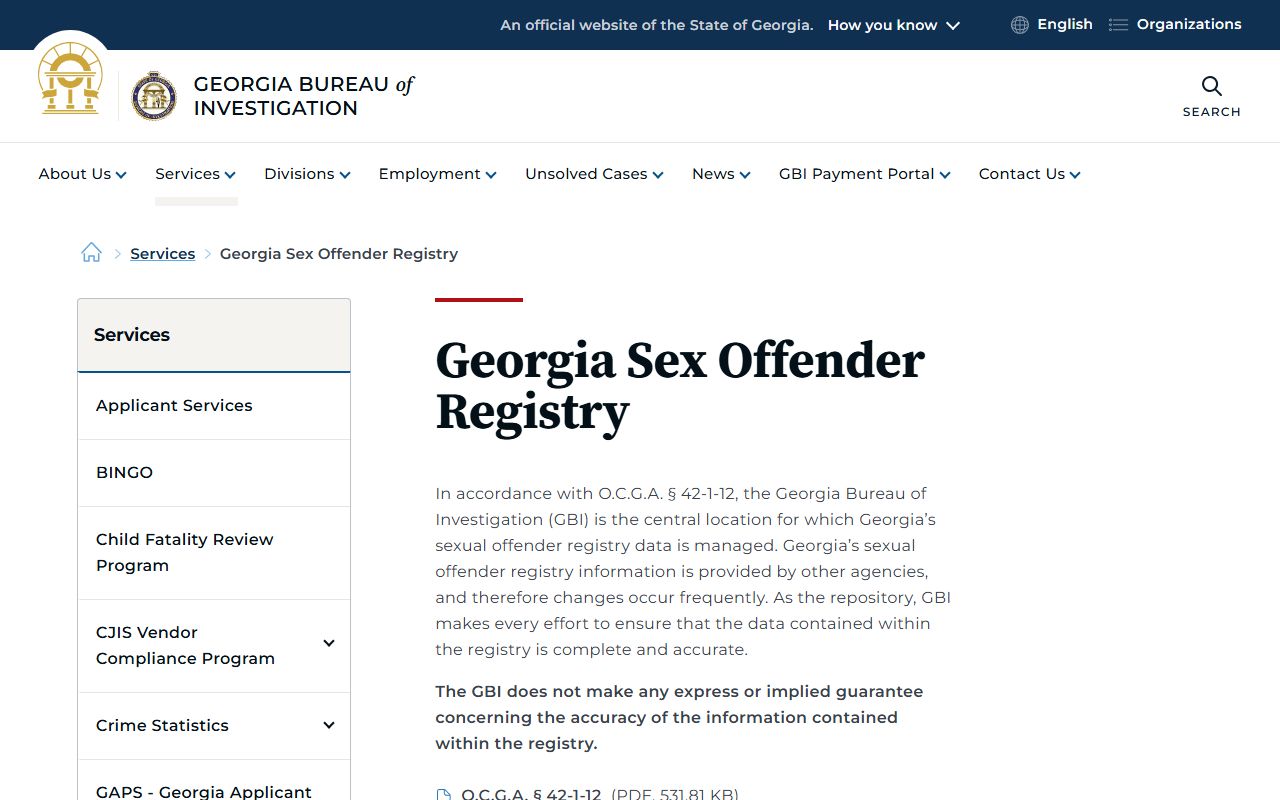
Registry status, custody status, and court disposition can involve different agencies and should be checked through their official channels.
Restricted Glynn County Criminal Records
Restricted Glynn County criminal records include juvenile cases, sealed matters, restricted criminal-history records, safety-sensitive victim information, medical or mental-health details, protected addresses, and personal identifying information. A person seeking restriction should start by separating the arrest record from the final court disposition. The research identifies the arresting agency, case number, charge, arrest date, prosecuting office, and final disposition as key facts needed for restriction review.
Filing fees and forms were not fully located in official county sources for every criminal restriction situation. Current requirements should be confirmed with the Clerk of Superior Court, State Court clerk, the prosecuting office, or defense counsel. A public search result that disappears after restriction does not mean every government agency lost access to the record.